Image credit: Claire Conlisk
Cloonbar Bog, in all likelihood, has never hosted an art event before, let alone a doughnut-themed one. It has however hosted rather a lot of other things. Over thousands of years, its peat has absorbed the evidence: pollen from ancient forests, the remains of animals, bog oak and maybe even the occasional preserved body. The bog does not forget. It just keeps things to itself.
On Saturday 14 March, it became something else entirely - a mini embassy of The Doughnut (W)Hole Pavilion of the Wrong Biennale, an international digital art exhibition. A small stretch of Galway bog, accustomed to wind and silence and the odd snipe, now found itself briefly entangled with the global art world.
The event was organised and led by pavilion artist Sarah Deane, for whom the connection to the bog was personal. Sarah's work, All that is solid…, is rooted in absence — specifically, the life of her great aunt, Dr Annie Deane, who she had never met but was always intrigued by. For a pioneering GP who tended to her community for over thirty years, Dr Annie left surprisingly few traces. Rather than attempting to fill the gaps in Annie's story, the work finds comfort in the unknown, recognising that the spaces she left behind are as essential to understanding her as any tangible trace. Through found and generated images, the fragments become starting points for new kinds of traces - visual speculations that live in the space between what we know and what we imagine. The bog, with its thousands of years of memory, turned out to be the perfect place for these threads to find each other.
The event took place in collaboration with Bog Fam - a small community group that meets regularly to explore their relationship with the bog landscape through photography. The concept grew from Sarah's work and took memory and absence as its central concerns, proposing the bog as an expansive memory field - not unlike latent space - where traces of past lives remain suspended, neither gone nor wholly present.
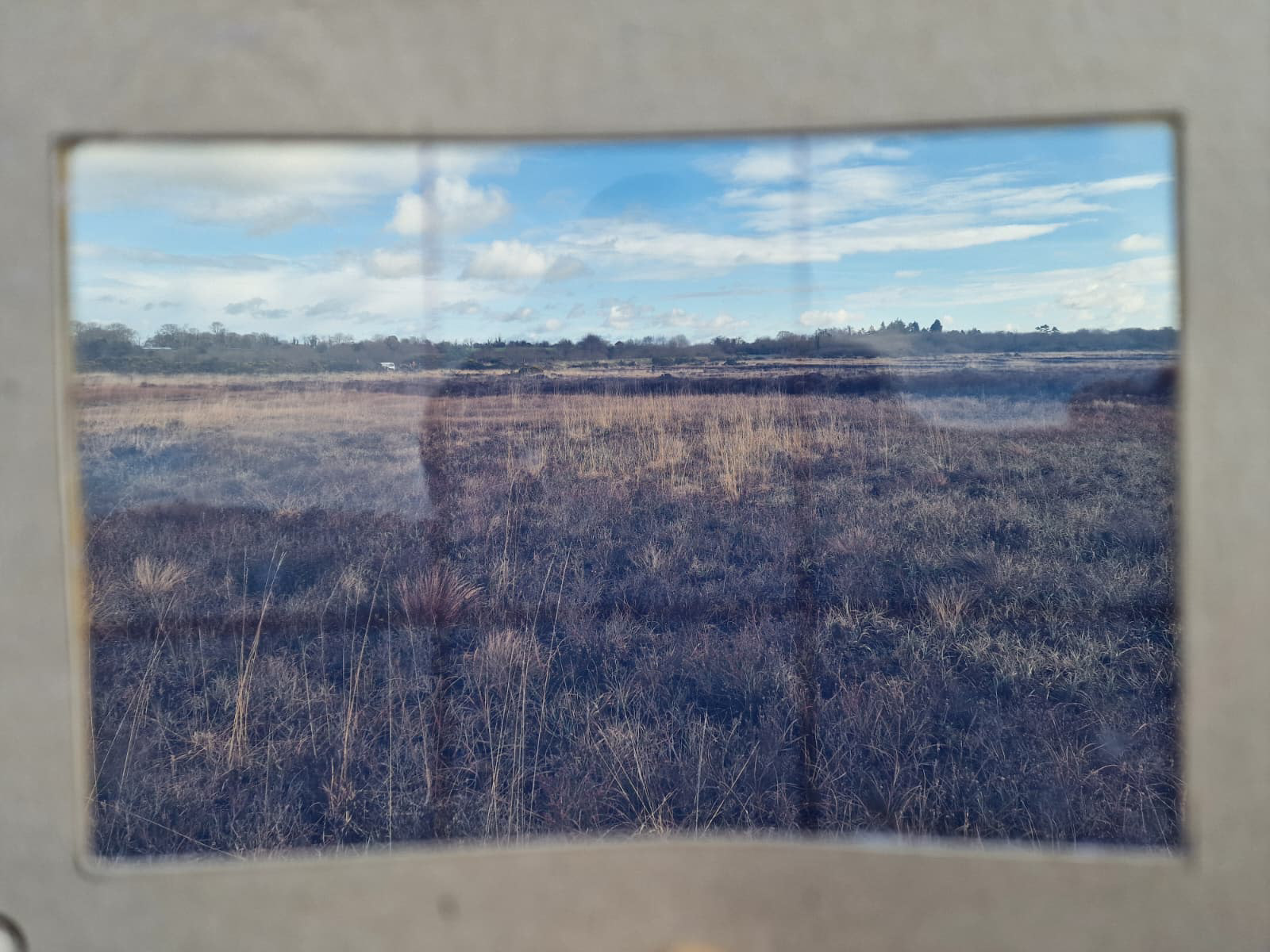
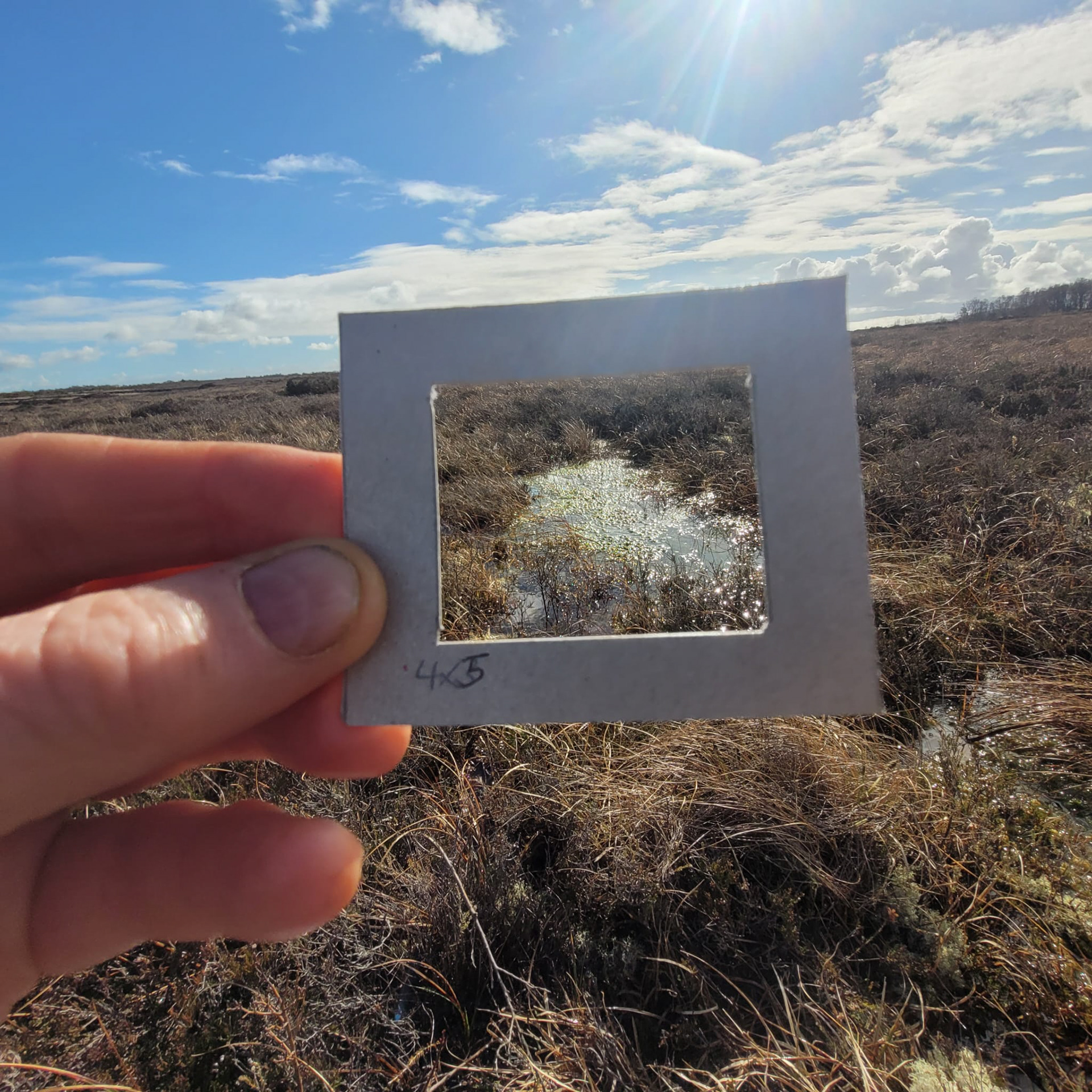
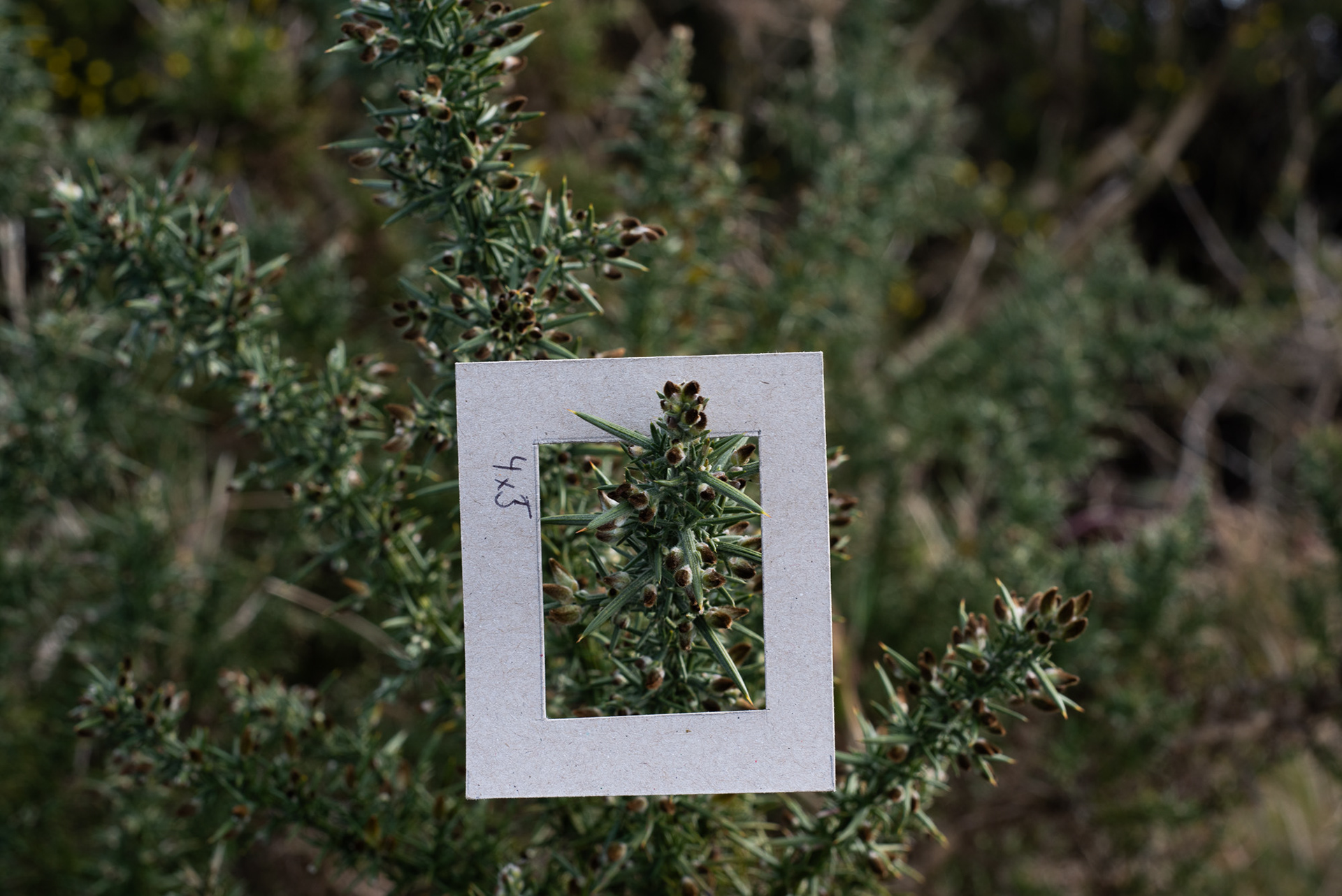
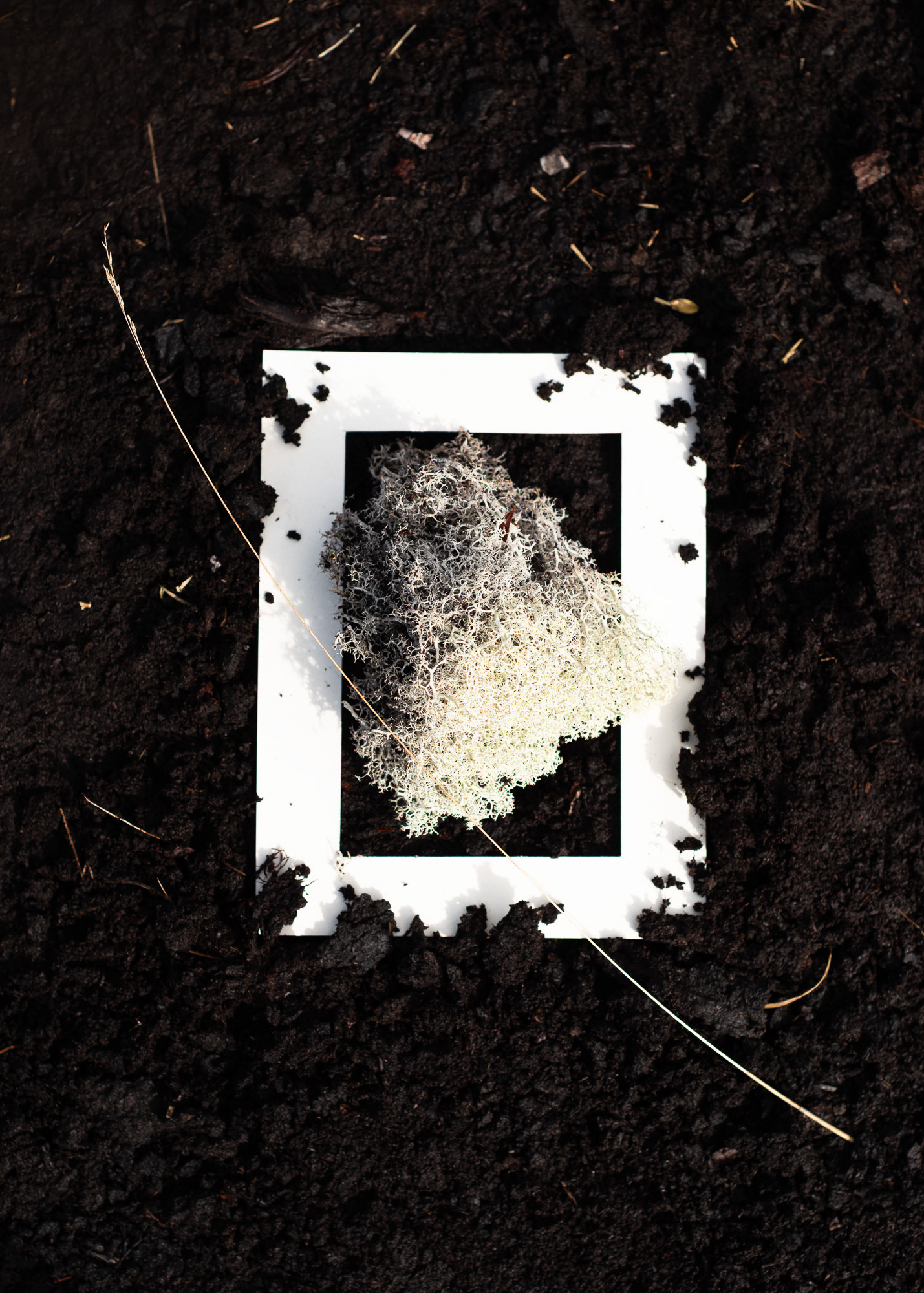
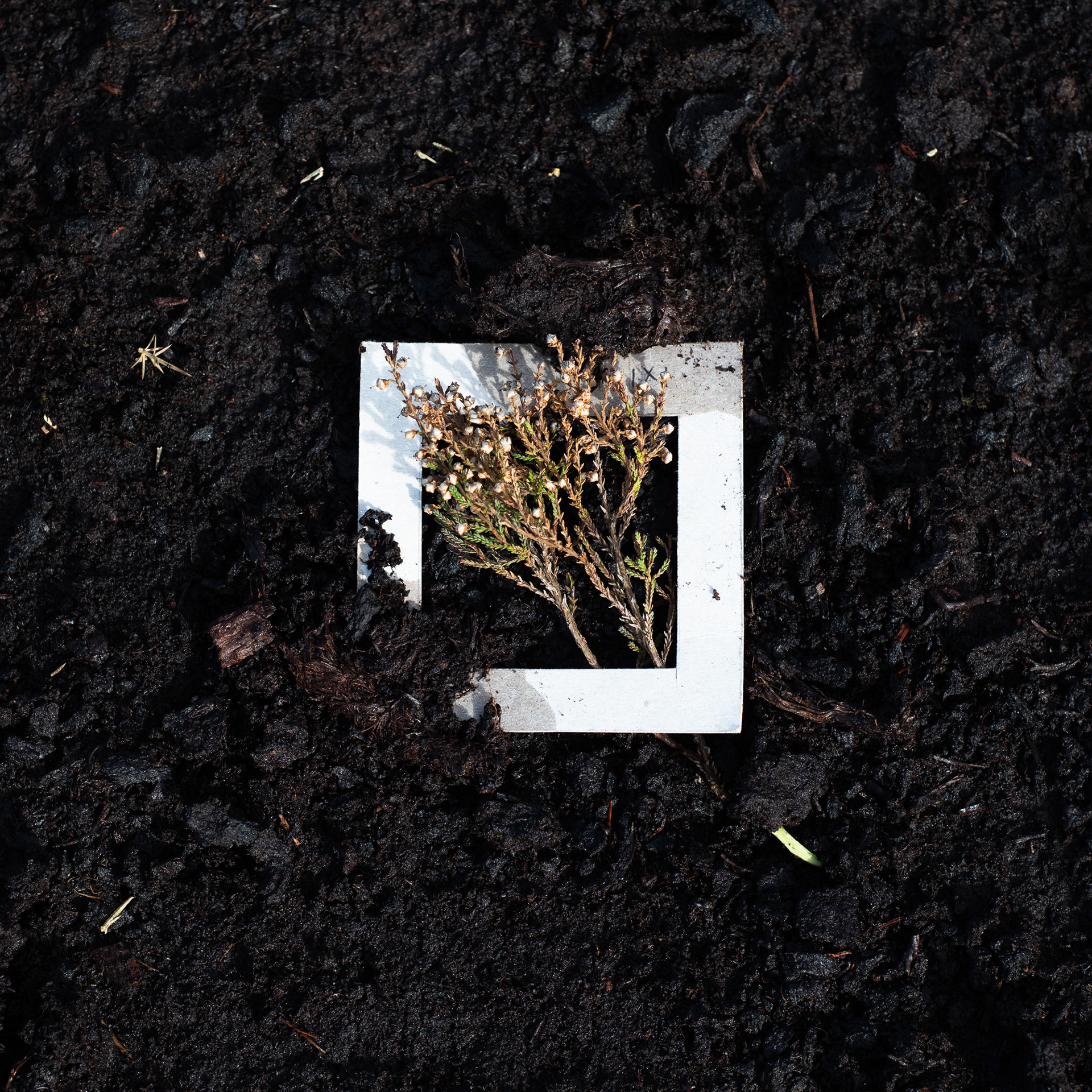
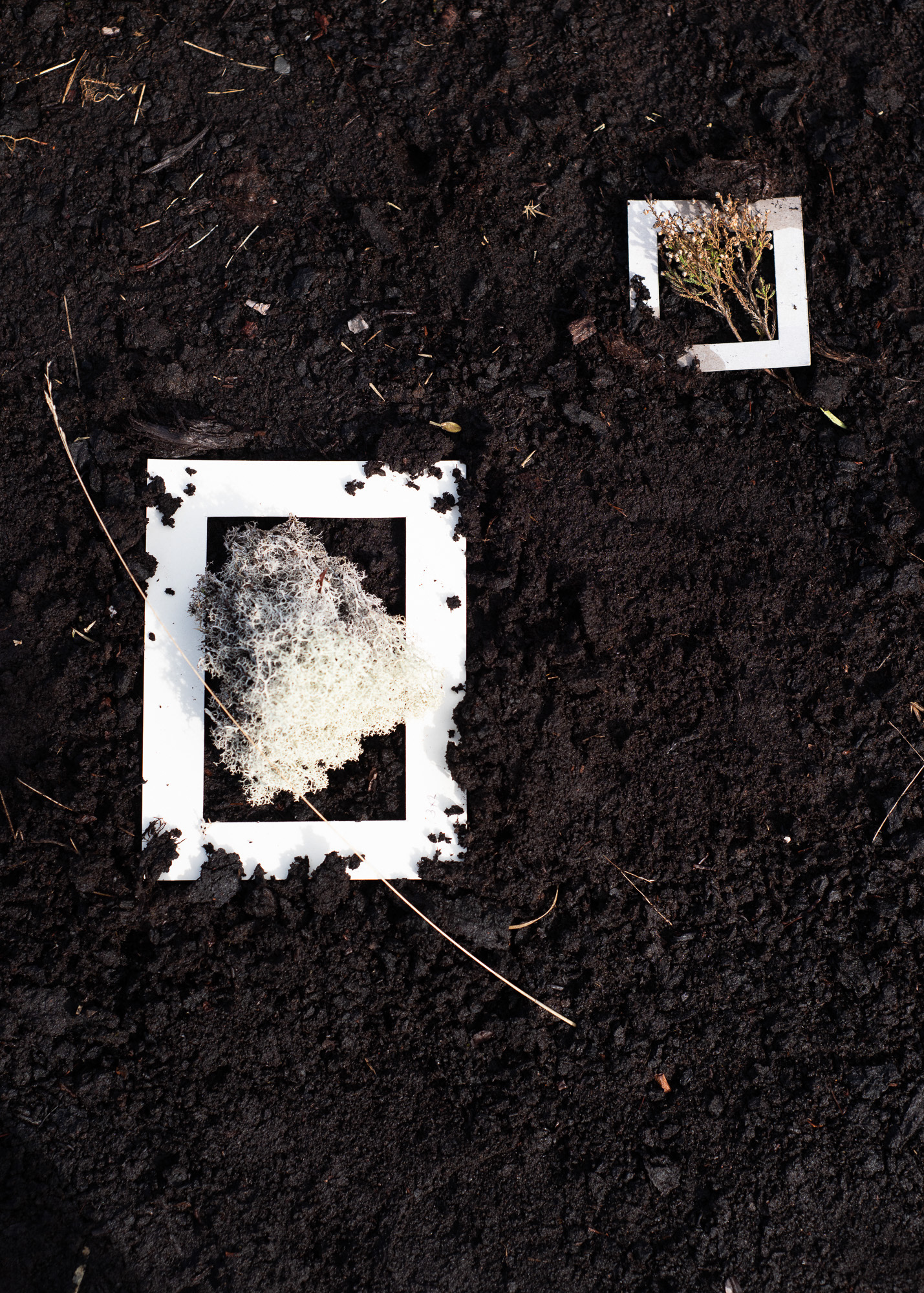
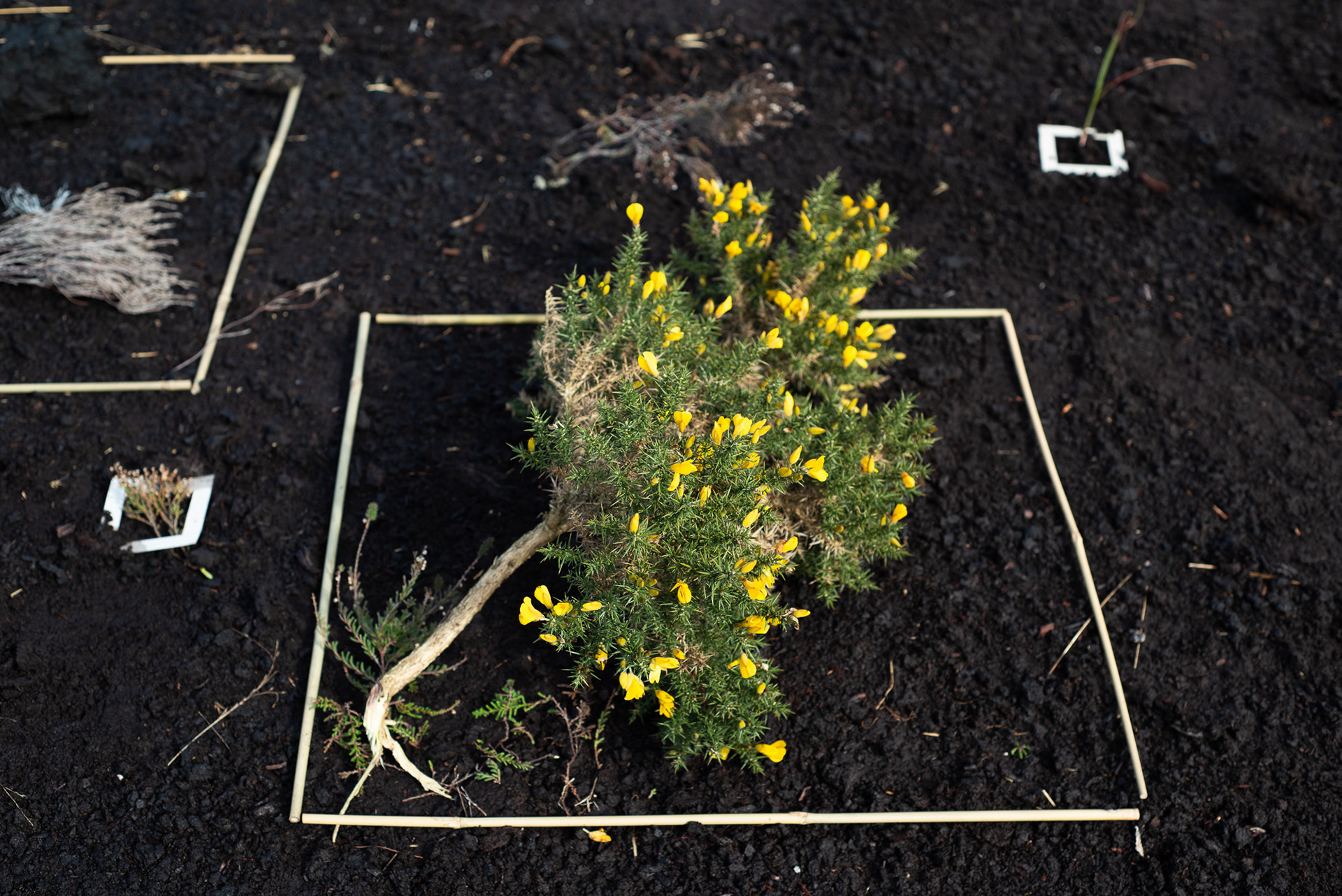
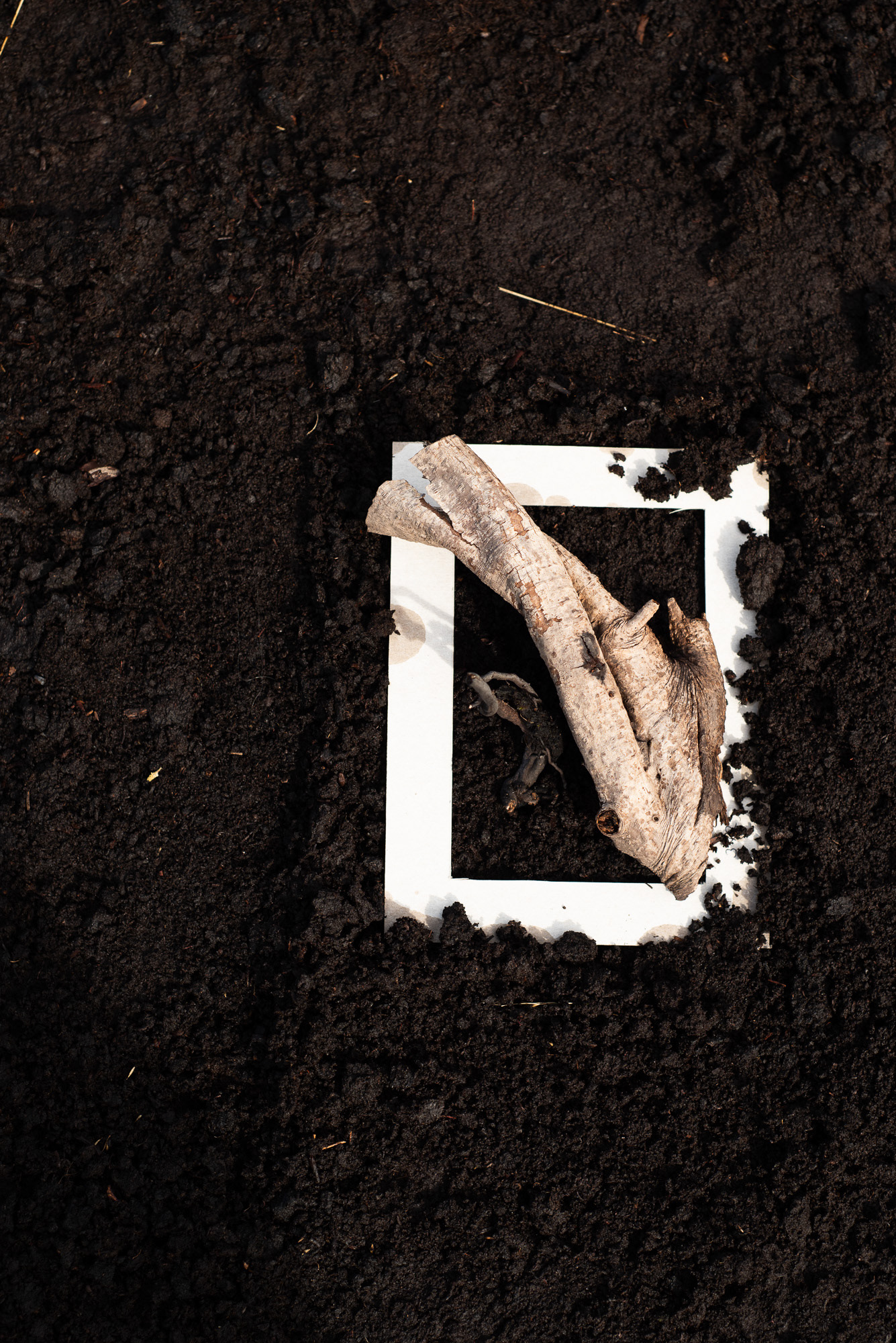
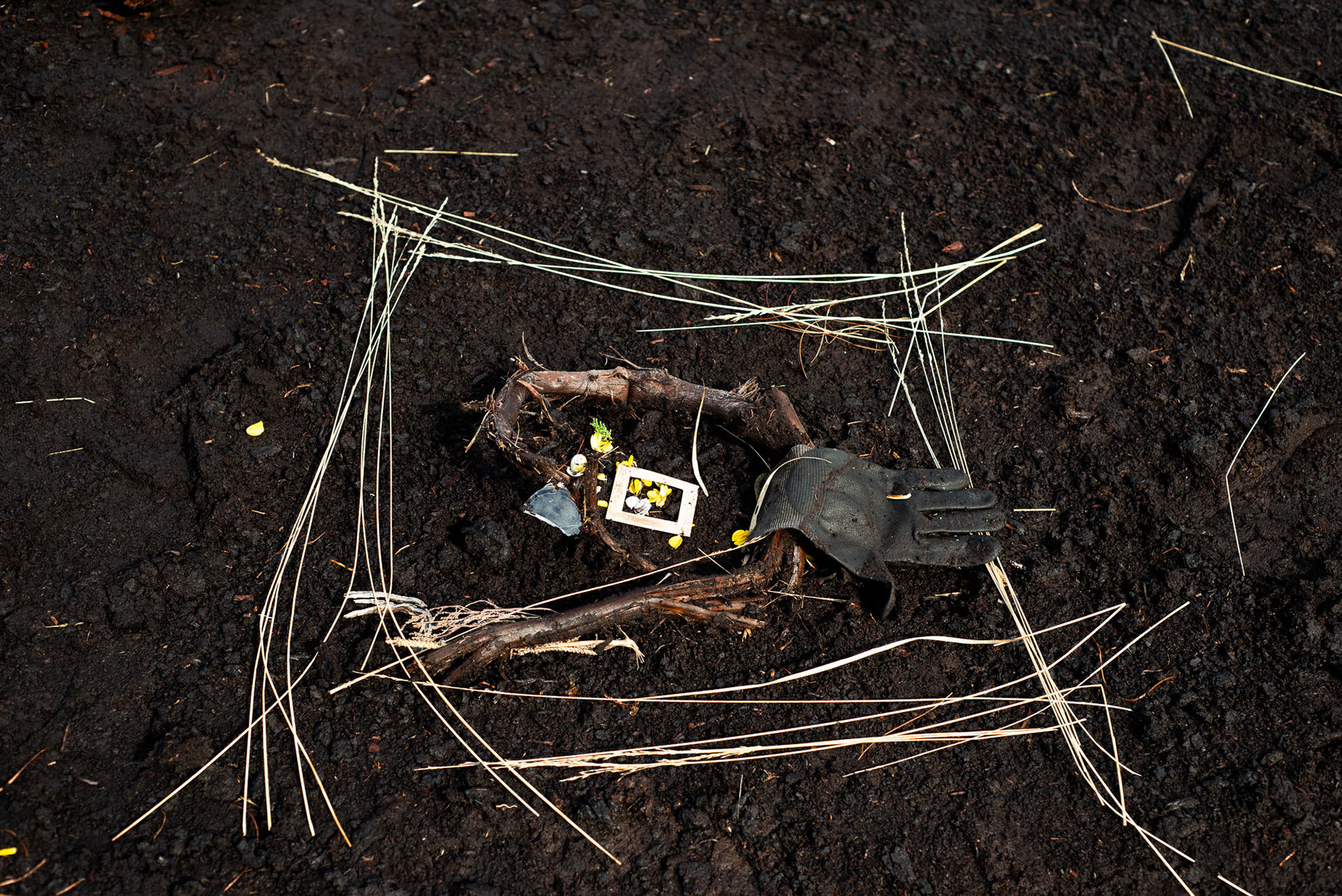
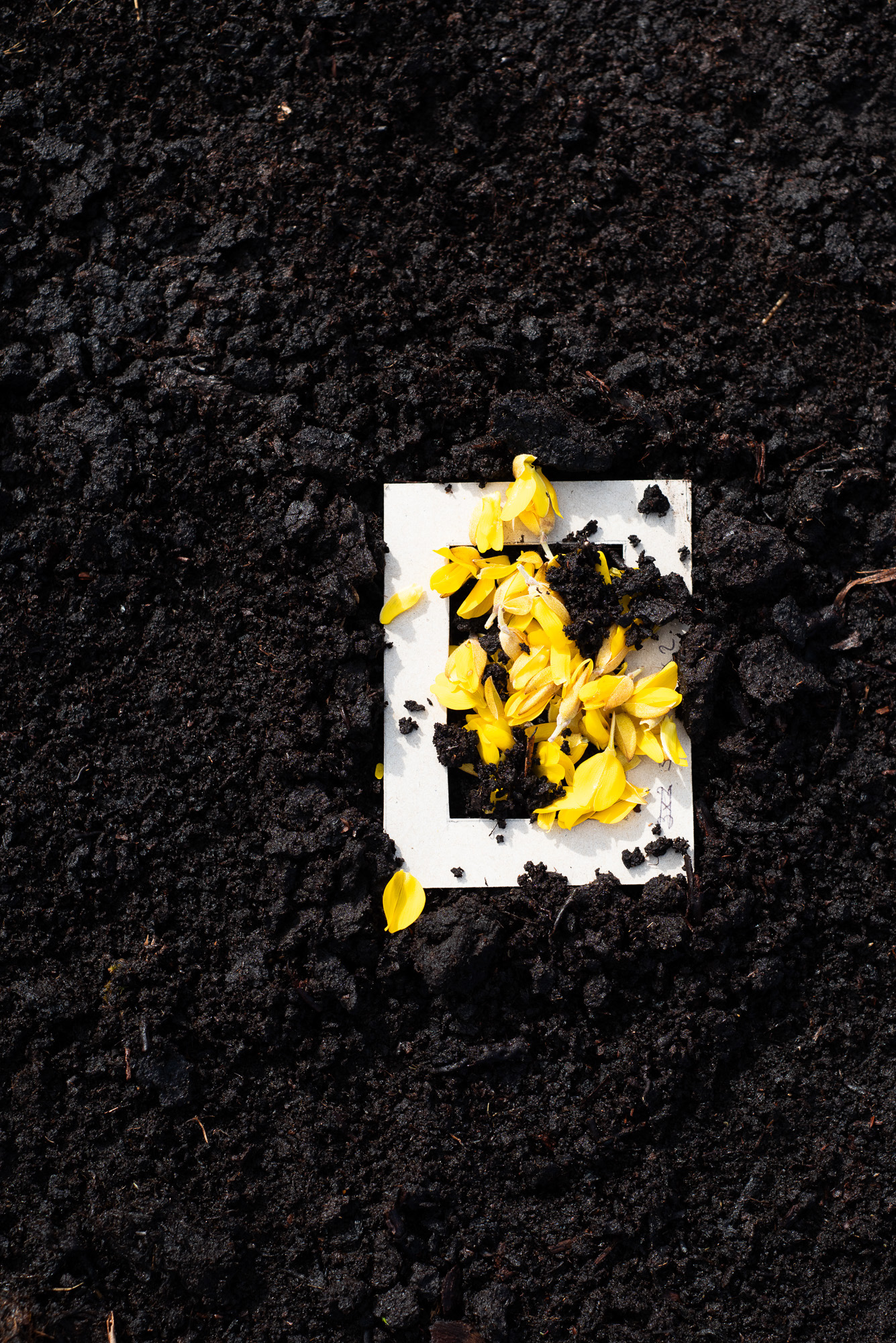
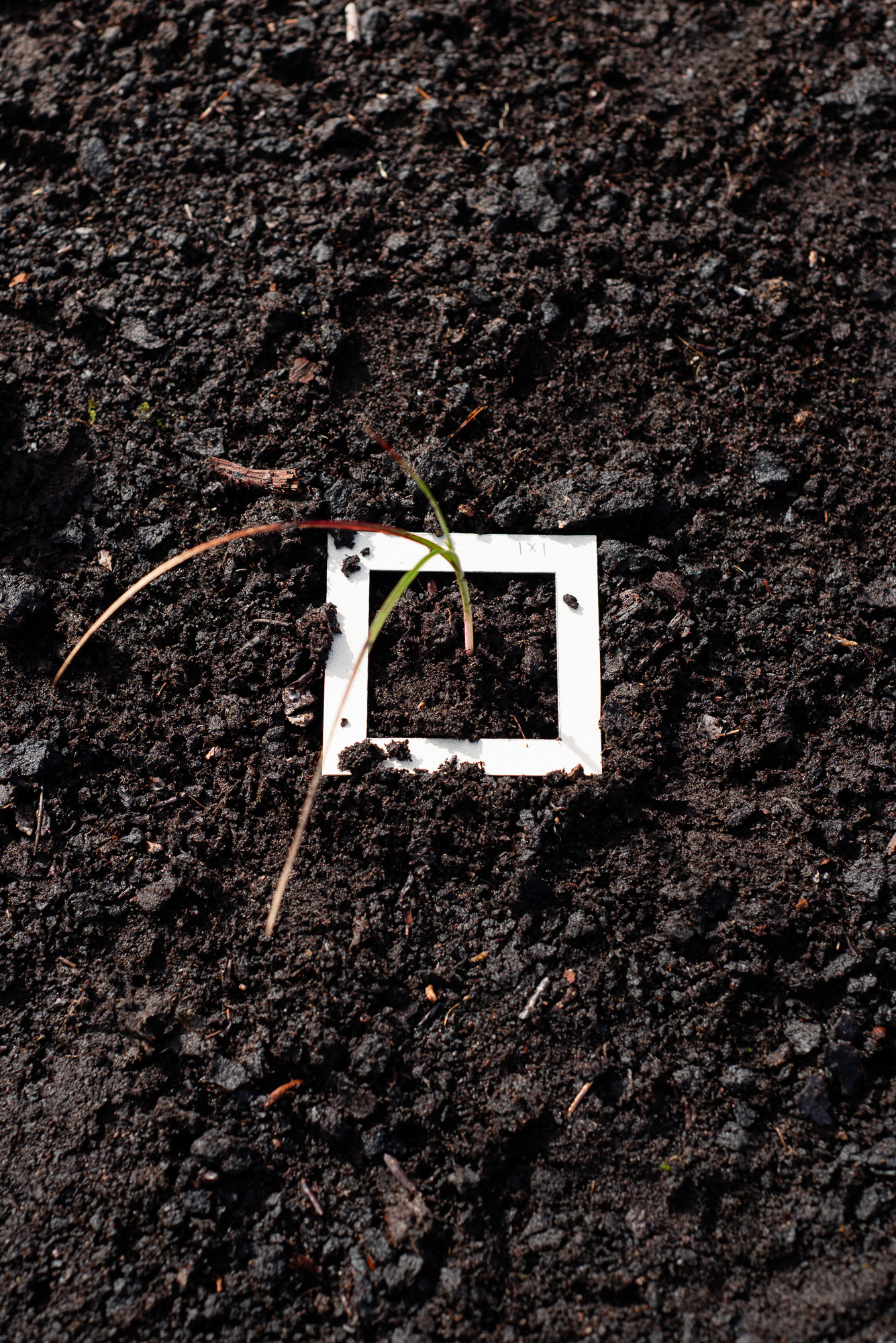
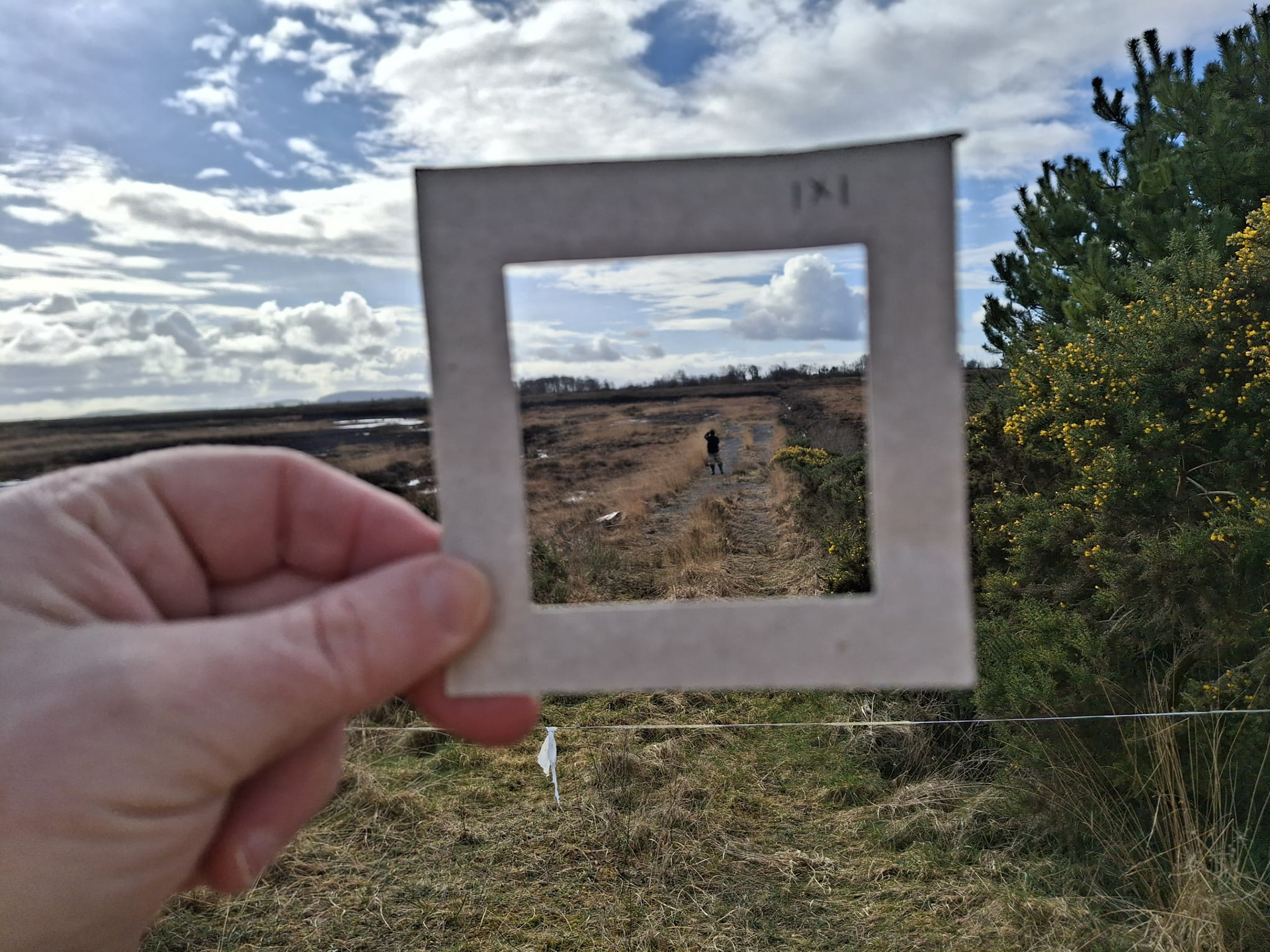
Working with simple cardboard frames, Bog Fam wandered across the bog - holding voids up against the landscape. The frame is a reminder that every photograph is a fragment: the world continues beyond its edges, indifferent to being captured. Like memory, the photograph is defined as much by what it leaves out as what it holds. The hole is not an absence to be filled. It is part of what makes the thing whole.
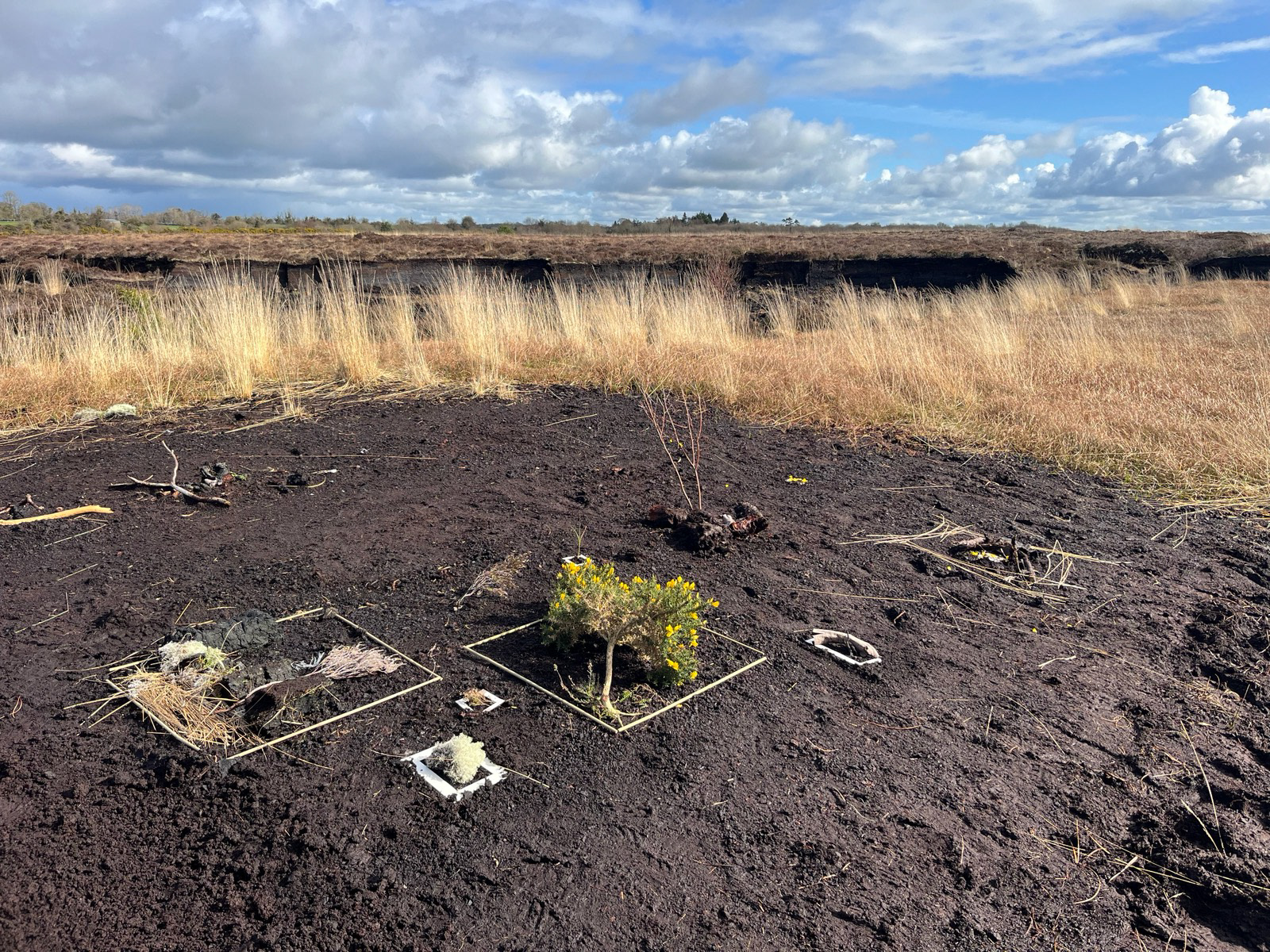
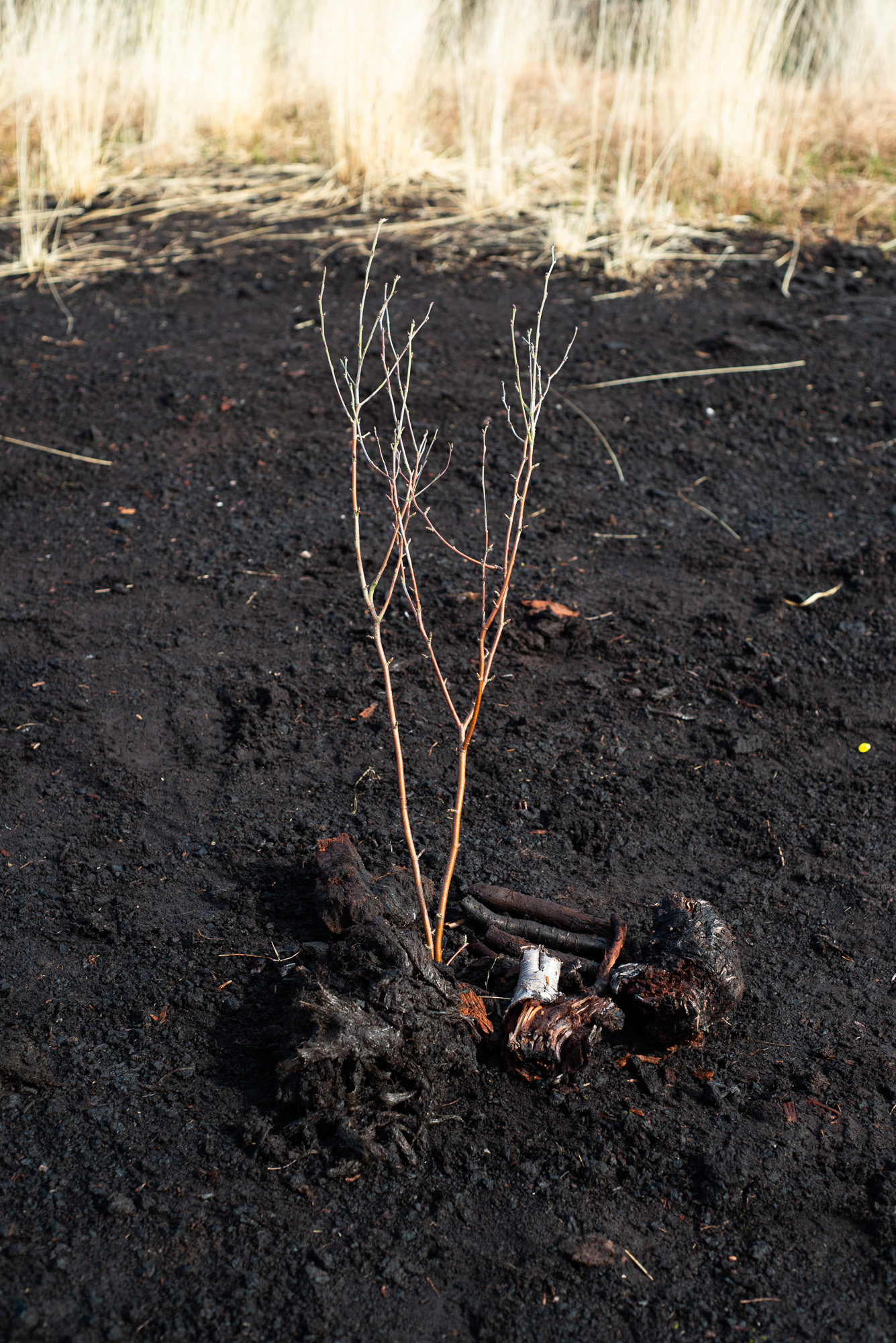
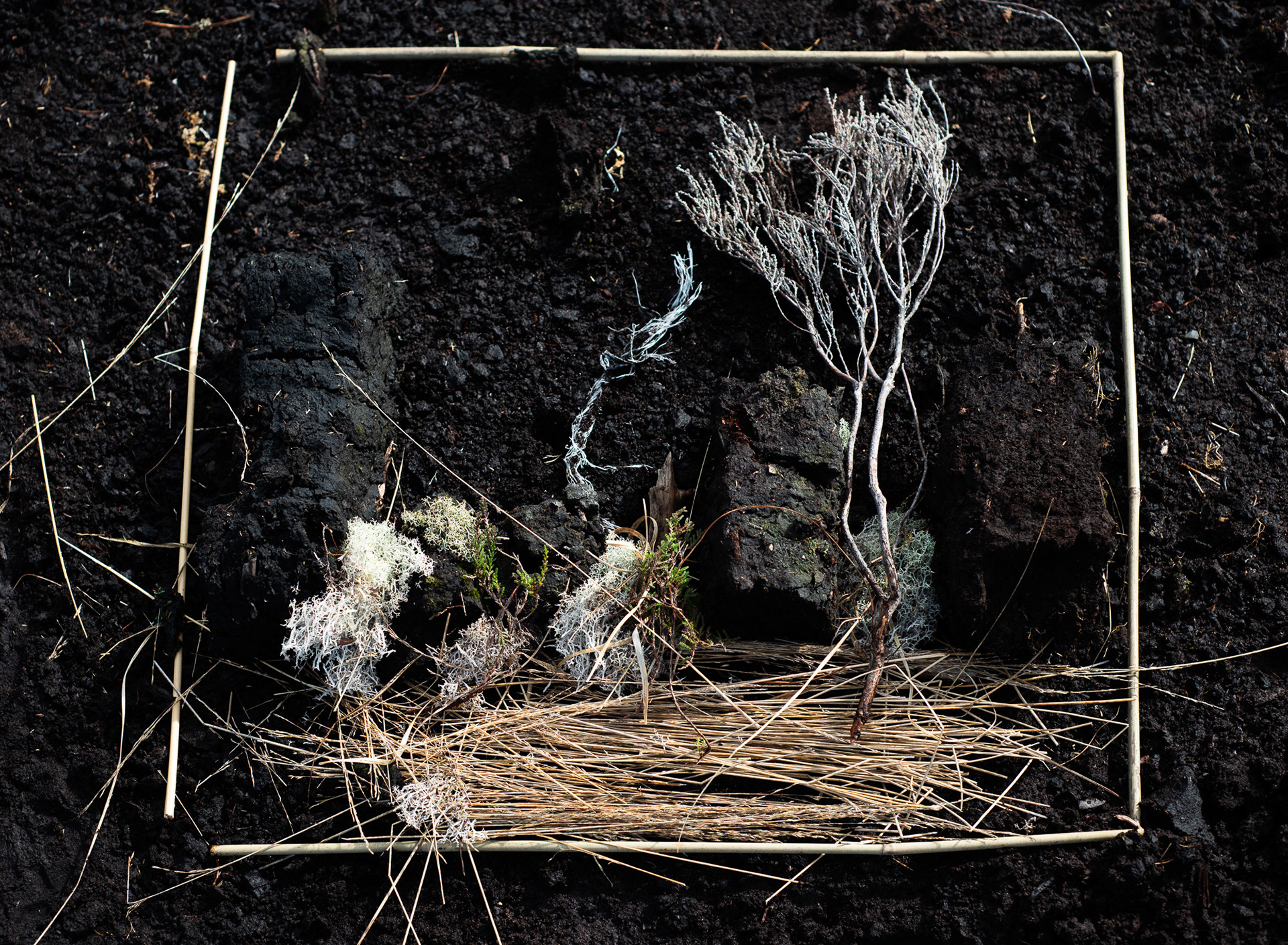
A piece of Cloonbar was then turned into a gallery in the peat - a temporary installation site where the frame and the void took centre stage. Moss, grasses, lichen and turf - bog memories in their own right - were arranged within the openings and spilled out around them, a configuration of materials, memory and place. For Bog Fam, the act of photographing had shifted from recording the landscape to assembling and activating the traces already present within it.
And then, doughnuts - a ritual that has accompanied the pavilion since the beginning, and one the bog had almost certainly never encountered before. In a landscape accustomed to preserving things slowly over millennia, the doughnuts didn't last long.
Bog Fam are: Claire, Janie, Jim, Mike B, Mike G, Rachel and Seamus.
“My childhood memories of the bog are the turf machine coming and the smell of fresh peat, midges, sore backs, sunburn, the tractor getting stuck, filling endless trailers of turf, turf dust in our eyes, the wheelbarrow breaking, putting the bottle of Cidona in the drain to keep it cool, firing clods of turf at each other and meeting people from far away (like Headford) that you wouldn’t see again until next year.”
Seamus, in absentia